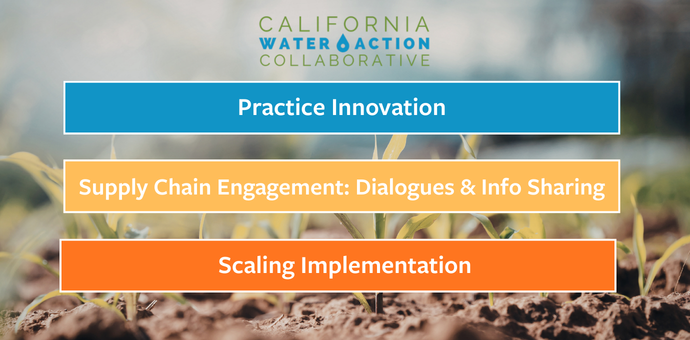
Practice Innovation
We launched three pilots in 2025 focused on stacked and regenerative practices (see details below).
We are developing a new set of initiatives to support the implementation of soil health practices and water benefits. All will have soil health and other benefits, and some will have volumetric water savings through irrigation optimization in a regenerative ag context, potentially enabling more investment from the corporate water sector.
Supply Chain Engagement: Dialogues & Info Sharing
On January 30, 2026, we launched the first dialogue in the series that engages a broad set of supply chain actors ranging from leading growers to advisors to corporate entities (retailers, food and beverage companies). We started by creating a shared foundation of understanding, getting to know one another, and finding intersecting interests.
Future dialogues will be deeper dives and more interactive among all involved.
Future efforts may focus more on practical information sharing and peer-to-peer learning, pending additional funding, on very practical, action-oriented needs.
We expect longer-term engagement to include corporate pilots testing new methods to support, source, and grow market demand. Opportunities will emerge from the dialogues.
Scaling Implementation
This capacity-building and enabling work will be supported through field days, webinars, white papers, targeted technical assistance, and case studies, as well as peer-to-peer learning among growers and advisors.
Target Outcomes
The RAW Lab supports a range of interconnected outcomes that reflect the complexity of agricultural water challenges and opportunities. Outcomes include but are not limited to the following:
Water
Reduced water demand and increased effective supply
Improved water quality
Enhanced watershed resilience and soil water-holding capacity
Groundwater recharge
Climate
Reductions in greenhouse gas emissions, including through decreased synthetic nitrogen use
Increased carbon benefits aligned with emerging reporting and disclosure requirements
Co-benefits for water quality and soil health
Biodiversity & Nature
Riparian and wetland restoration
Protection of GDEs
Habitat creation through hedgerows, pollinator plantings, and bird habitat
Nature-based solutions
Social Equity
Increased grower viability and economic resilience
Co-benefits for farmworker and community health